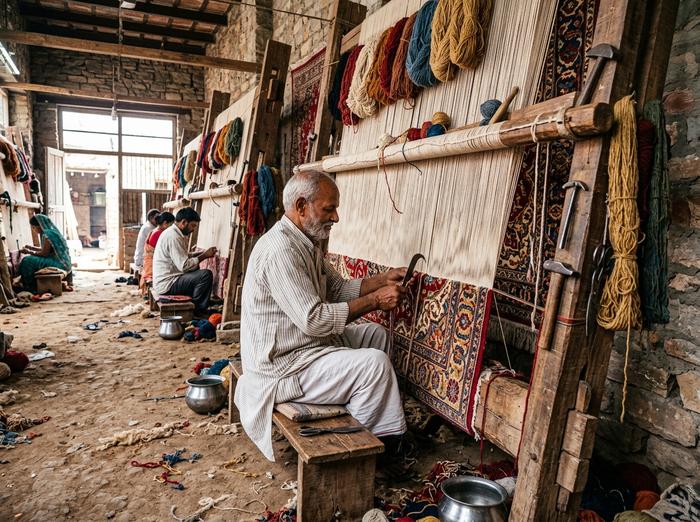
Both dhurries and kilims are flat-weave rugs (no pile), but they differ in construction, appearance, durability, and pricing. Understanding these differences helps you choose the right product for your market.
Indian Dhurries
Dhurries are flat-woven using cotton, wool, or jute. They're lighter, more affordable, and have a casual, relaxed appearance. Popular patterns include geometric designs, stripes, and traditional Rajasthani motifs. Bhadohi and Rajasthan are the main production centres.
Kilim Rugs
Kilims are also flat-woven but use a different technique (interlocking wefts) that creates a tighter, more durable weave. They tend to have bolder, more intricate patterns and a slightly heavier feel. Indian kilims often draw from Turkish and Persian design traditions.
Durability Comparison
Kilims are generally more durable than dhurries due to their tighter weave. However, a well-made cotton or wool dhurrie can last years with proper care. Both are suitable for moderate-traffic areas.
Pricing
Dhurries are more affordable — they're faster to produce and use less expensive materials. Kilims command higher prices, especially in handwoven wool. Both offer excellent value compared to machine-made alternatives.
Market Positioning
Dhurries work well for: casual interiors, beach houses, children's rooms, and budget-conscious markets. Kilims work well for: designer interiors, bohemian décor, premium retail, and markets that value handcraft authenticity.
Need Ground-Level Sourcing or Quality Control in India?
QualityLink Global is based in Jodhpur. We perform on-site factory audits, pre-shipment inspections, and container loading supervision across Rajasthan and North India.
🛒 Related Products & Services
Interested in sourcing these products? We are based in Jodhpur and can help. Get a free quote →