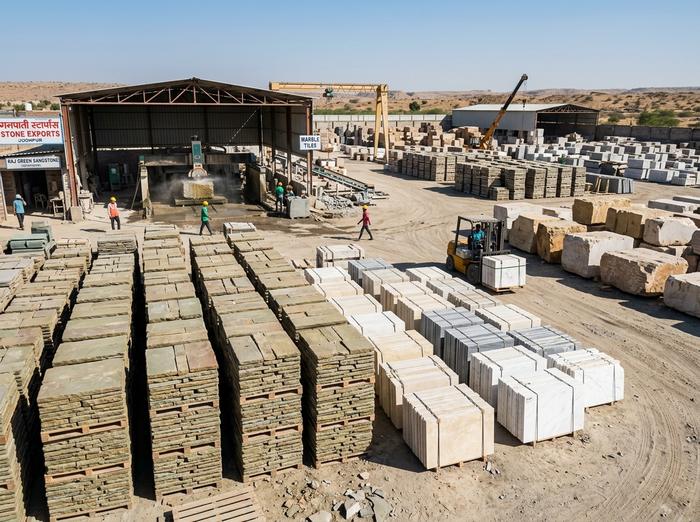
Natural stone is one of India's top exports, but it comes with unique quality challenges. Every piece is slightly different — it's natural, after all. The key is understanding the difference between natural variation and genuine defects.
What to Check
- **Colour consistency**: Natural variation is expected, but the overall tone should be consistent across the order
- **Dimensions**: Stone products should be within specified tolerances — typically ±1-2mm for tiles, ±5mm for larger pieces
- **Surface finish**: Should be uniform — no rough patches, chipping, or inconsistent polishing
- **Thickness**: Critical for tiles and cladding. Variations affect installation
- **Structural integrity**: No cracks, fissures, or weak points that could cause breakage during installation
Stone-Specific Defects
- **Fissures**: Natural lines in stone that can weaken it — acceptable if minor, problematic if major
- **Iron stains**: Rust-coloured marks from iron content — sometimes natural, sometimes a defect
- **Honeycombing**: Porous areas in sandstone — can affect durability
- **Edge chipping**: Damage from handling — always a defect
Testing Methods
For stone, basic tests include: water absorption test (indicates porosity), scratch hardness test, and visual inspection under different lighting conditions. More advanced testing (compressive strength, abrasion resistance) can be arranged for large orders.
Need Ground-Level Sourcing or Quality Control in India?
QualityLink Global is based in Jodhpur. We perform on-site factory audits, pre-shipment inspections, and container loading supervision across Rajasthan and North India.
🛒 Related Products & Services
Interested in sourcing these products? We are based in Jodhpur and can help. Get a free quote →