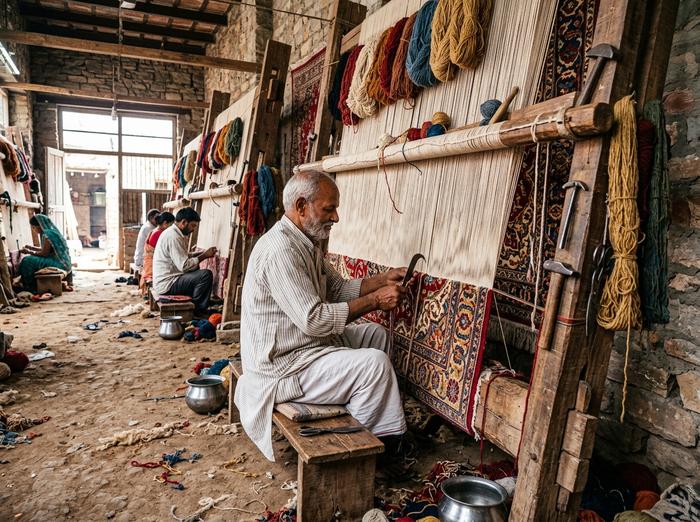
Indian carpets range from simple cotton dhurries worth $5 per square metre to elaborate hand-knotted silk carpets worth thousands. Understanding quality grading helps you match products to your market and budget.
For Hand-Knotted Carpets
Quality is primarily determined by knot density (KPSI — knots per square inch). Higher density means more detail, more durability, and higher price. Common grades: 40-60 KPSI (standard), 60-80 KPSI (good), 80-120 KPSI (premium), 120+ KPSI (fine).
For Flat-Weave (Dhurries/Kilims)
Quality is determined by weave tightness, thread count, and material quality. Look for: tight, even weave with no gaps, consistent thread thickness, clean edges, and colour fastness.
Material Quality
- **Wool**: New Zealand wool is premium; Indian wool varies by region
- **Silk**: Pure silk vs silk blend — huge price difference
- **Cotton**: Good for dhurries and rug foundations
- **Jute**: Eco-friendly but less durable than wool
- **Synthetic**: More affordable, easier to clean, but less value perception
Dye Quality
Natural dyes (vegetable dyes) are premium — they produce richer, more nuanced colours and are environmentally friendly. Synthetic dyes are more consistent and affordable. Both are acceptable; just specify what you want.
Need Ground-Level Sourcing or Quality Control in India?
QualityLink Global is based in Jodhpur. We perform on-site factory audits, pre-shipment inspections, and container loading supervision across Rajasthan and North India.
🛒 Related Products & Services
Interested in sourcing these products? We are based in Jodhpur and can help. Get a free quote →